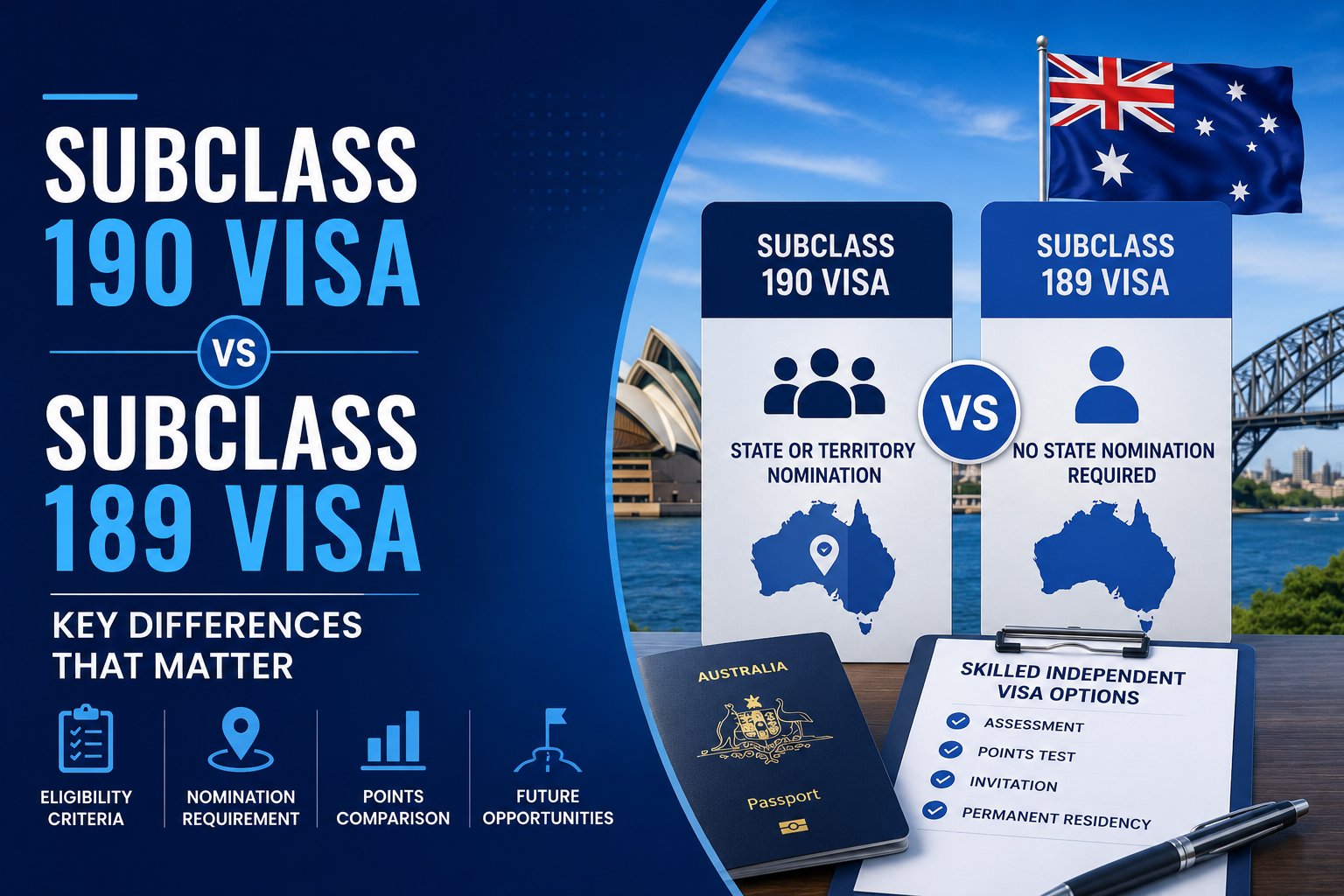
Choosing between the Subclass 190 visa and the Subclass 189 visa may look simple on paper. Both sit within Australia’s points-tested skilled migration system and lead to permanent residency through the skilled independent visa pathway or state nomination.
In reality, the difference shows up in how applications move. Timelines, selection patterns, and overall chances can vary depending on which path you choose – and where your profile currently stands.
The pathway is straightforward. There’s no involvement from an employer, and your outcome depends entirely on your profile – points, occupation, English score and experience.
The state-nominated route works slightly differently. A state or territory-nominated pathway adds points to your profile, and with additional points, you move forward with a stronger positioning.
That distinction – independent versus nominated – is what shapes everything else.
When you step back, the decision becomes less about preference and more about where your profile fits best.
The Subclass 189 skilled independent visa offers complete flexibility once granted. You’re not tied to a location or sponsor.
What matters here is ranking. Meeting the minimum points threshold isn’t enough on its own. Invitations are issued based on how your profile compares with others in the pool at that time.
That’s why outcomes vary. Some applicants receive invitations quickly, while others remain in the system longer despite meeting eligibility requirements.
The Subclass 190 state nomination visa introduces a different dynamic by adding state-level selection across Australia’s skilled migration system.
Each state reviews applications based on its own priorities. If your occupation aligns and your profile meets the criteria, you may receive a nomination.
The extra points certainly help, but the bigger advantage is selection at an earlier stage. Your application is effectively assessed twice – once by the state and then federally.
There is also an expectation to live and work in the nominating state. It’s a practical commitment rather than just a formality.
With the independent stream, invitations are issued through SkillSelect EOI rounds federally. Selection depends entirely on your ranking at that moment.
With the nominated pathway, the process starts earlier. The state assesses your profile first and sends you a nomination. Once nominated, you receive an invitation from the department to apply, and the federal assessment stage usually follows more predictably.
This added layer often helps applicants who are not progressing through the general pool.
There isn’t a single correct answer – it depends on your profile.
The Subclass 189 visa tends to suit applicants who:
The Subclass 190 visa is often a better fit if:
In some cases, applicants keep both pathways active to maintain flexibility while waiting for movement.
Our focus is on alignment before action.
Two applicants can look similar on paper but have very different outcomes depending on timing, occupation demand, and state requirements.
The process typically involves:
From there, the application is structured accordingly – whether that means prioritising one route or keeping multiple options open.
Both pathways lead to permanent residency, but they don’t operate in the same way.
The independent option depends entirely on ranking within a competitive pool. The state-nominated option introduces an additional layer that can improve progression.
Neither is better by default. The right choice depends on where your profile stands today and how it aligns with current demand.
Taking the time to assess this properly usually leads to a clearer path – and fewer delays later.
Still weighing your options? We help you cut through the complexity and move forward with clarity. Connect with Kritin Global today.
This information is general in nature. It does not constitute migration advice as visa conditions can change anytime. For advice specific to your situation, consider consulting a registered migration agent or checking the Department of Home Affairs website.