
This guide covers the most common PR application mistakes made by skilled visa applicants in Australia. Applying for permanent residency isn’t just about submitting forms – it’s a process that requires accuracy, timing, and a clear understanding of requirements.
Many applicants face issues not because they lack eligibility, but because small details are overlooked. In practice, most delays and refusals arise from avoidable PR application mistakes – particularly in points-based visa Australia applications where accuracy is critical.
This guide outlines where things typically go wrong and how to approach the process more carefully.
Australia’s migration system is evidence-based and detail-oriented. Every document and declaration is assessed carefully.
Even a minor inconsistency – whether in dates, records, or communication – can lead to delays or additional checks or, in serious cases, visa refusal in Australia.
A pattern seen across many residency applications is this: applicants focus heavily on eligibility but spend less time reviewing the final submission. That gap is where errors tend to occur.
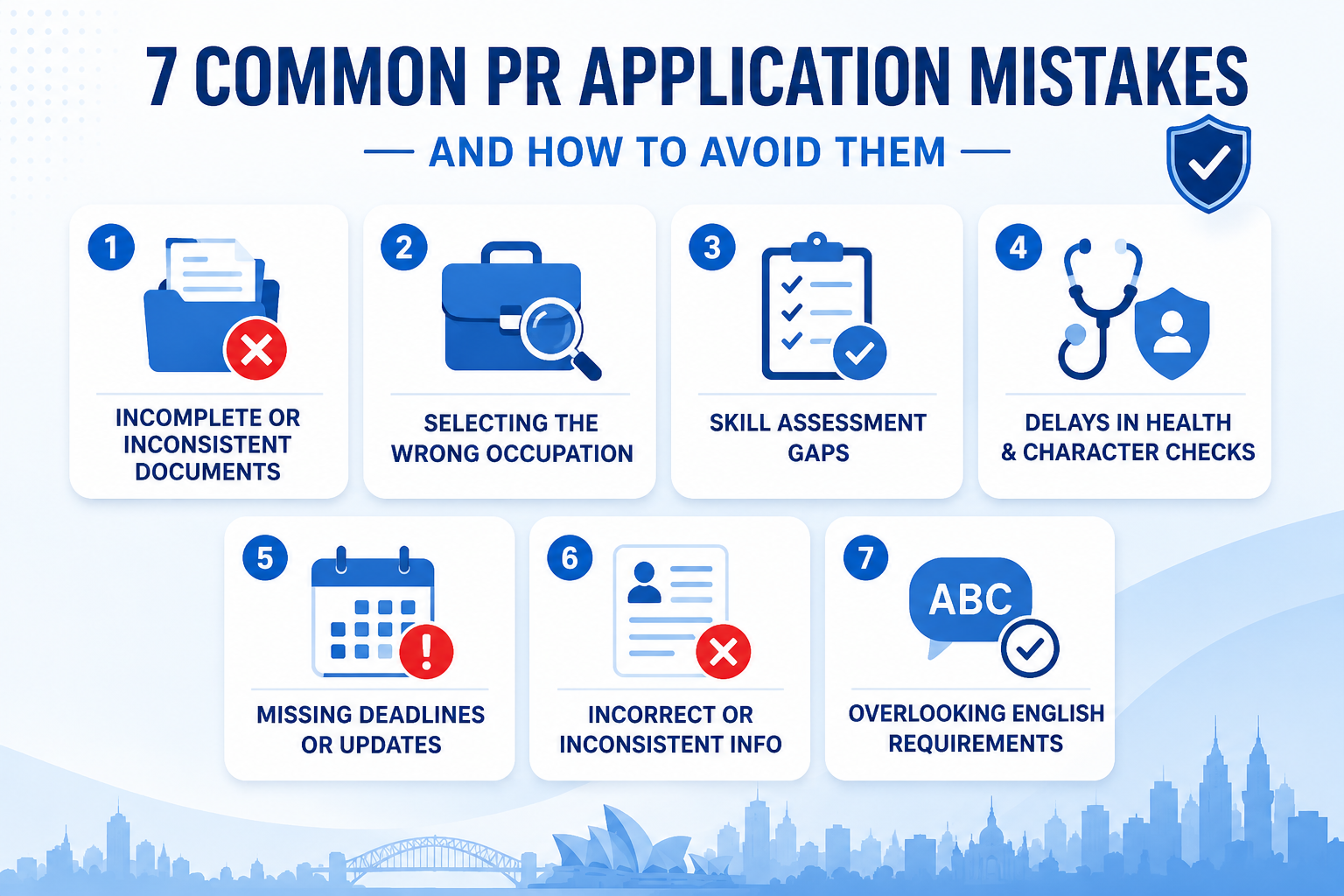
False or mismatched documents are among the most common issues.
This includes identity records, employment references, or police clearances. Even small inconsistencies – like variations or timeline gaps – can create complications.
How to avoid it:
Cross-check all documents against official records and ensure consistency across every submission.
Selecting a wrong occupation can result in rejection. Your occupation must appear on the relevant skilled occupation list, such as the MLTSSL or an individual state occupation list, to be eligible.
How to avoid it:
Your occupation is assessed based on your actual duties – not your job title. Make sure what you do day to day genuinely matches the official occupation description.
A valid skills assessment is a core requirement, but its documentation standards are often misunderstood.
Incomplete evidence or generic references can weaken your case.
How to avoid it:
Follow the criteria set by the relevant assessing authority and ensure all supporting documents are provided. Skills assessments can take anywhere from four to twelve weeks, so starting early is essential.
Medical examinations and police clearances are mandatory in most cases.
Delays at this stage can slow down your visa process, even when other parts are complete.
How to avoid it:
Schedule checks early and avoid leaving them until the last stage.
One of the more overlooked mistakes is failing to respond within required timeframes.
Authorities often request additional information with strict deadlines.
How to avoid it:
Check your ImmiAccount and email regularly. Timely responses are essential – authorities typically require responses within 28 days.
Even unintentional inaccuracies can affect outcomes.
Inconsistent work history or unclear documentation may lead to further scrutiny.
How to avoid it:
Ensure all details are accurate and aligned across every document you submit.
Expired test results or insufficient scores can affect eligibility for permanent residency in Australia.
How to avoid it:
Check your test result is still within date and meets the required score for your visa type. These are two separate things – both need to be right.
Simple habits often prevent larger problems:
These steps significantly reduce the risk of avoidable PR application mistakes.
Rather than simply processing submissions, we review documentation carefully, align occupation details, and keep timelines on track — so nothing gets missed along the way.
Avoiding PR application mistakes is less about complexity and more about attention to detail.
Most issues – whether related to documentation, deadlines, or eligibility – are preventable with the right approach.
Whether you’re lodging an EOI through SkillSelect or going for permanent residency in Australia, a solid application saves time. If the process feels confusing, getting clear advice early helps. We can evaluate your case, find the common mistakes, and make sure everything lines up before you submit.
Missing documents, incorrect occupation selection, inconsistent details, and delayed responses are the most common issues.
Yes, it is often seen that even minor inconsistencies can lead to delays or additional checks.
Ensure documents are accurate, respond promptly, and complete required checks early.
Missing a deadline could result in case closure or refusal. The safest move is to keep an eye on your ImmiAccount and reply to requests within the required timeframe.
This information is general in nature. It does not constitute migration advice as visa conditions can change anytime. For advice specific to your situation, consider consulting a registered migration agent or checking the Department of Home Affairs website.


