
Australia offers permanent residents long-term security, access to essential services, and a clear pathway to citizenship. However, a critical detail is often misunderstood: Australian permanent residency does not provide unlimited travel rights.
If you leave Australia and remain overseas after your visa’s travel facility expires, you may lose the legal right to return, even though your permanent resident status technically still exists.
This is where a Resident Return Visa (RRV) becomes essential.
Whether you travelled overseas for work, family responsibilities, business commitments, or unforeseen personal reasons, an RRV is often the only lawful way to re-enter Australia as a permanent resident. Understanding how it works can prevent serious travel disruptions and protect your future in Australia.
One of the most common misconceptions among migrants is that permanent residency allows unrestricted entry into Australia. In reality, every permanent visa is issued with a travel facility, usually valid for five years.
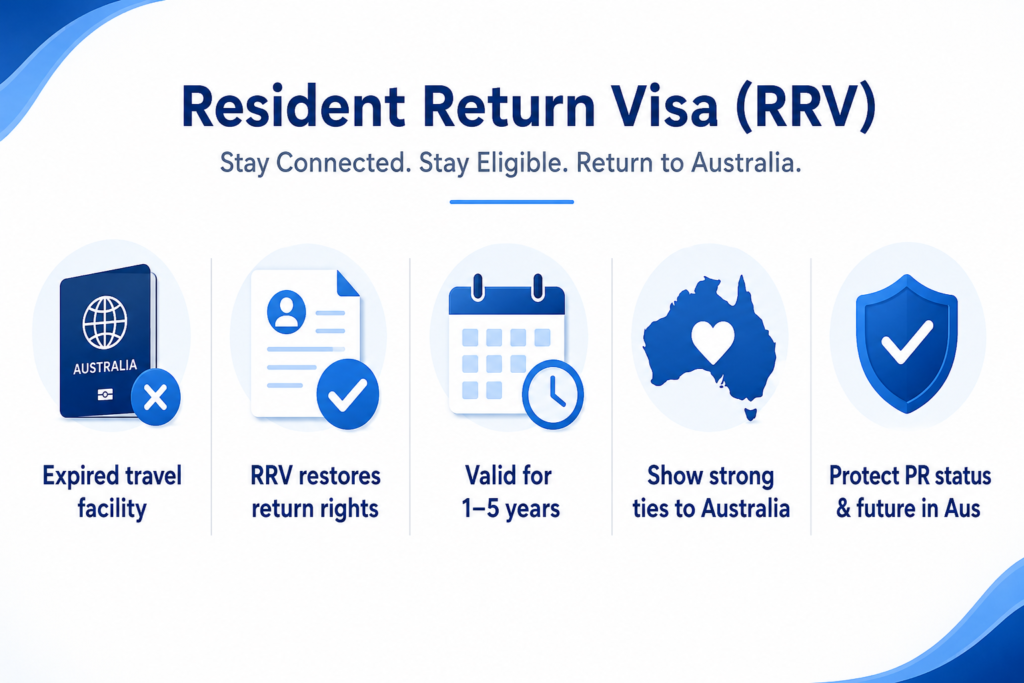
Once this travel facility expires:
A resident return visa restores your travel facility, allowing you to return to Australia lawfully and without complications.
A Resident Return Visa is not a new permanent visa. Instead, it confirms your right to return to Australia as an existing permanent resident.
A resident return visa allows you to:
The validity period of an RRV depends on your connection to Australia, including residence history and ongoing ties.
Resident Return Visas are commonly granted with one of the following durations:
Shorter validity periods often indicate the need to rebuild residence in Australia before future travel.
You are likely to need a resident return visa if:
This applies even if:
The deciding factor is legal travel validity, not intention.
To qualify for a five-year Resident Return Visa, you must demonstrate that you were physically present in Australia for at least 730 days (two years) in the last five years.
If you meet this requirement:
If not, the Department assesses your substantial ties to Australia.
When residence criteria are not met, immigration authorities assess whether you have substantial ties that benefit Australia. These ties must be genuine, ongoing, and well documented.
Personal ties
Employment or business ties
Economic ties
Compelling reasons for overseas absence
bevidence in one or more areas can support RRV approval, even after a prolonged absence.
Attempting to return to Australia without a valid resident return visa can lead to serious consequences, including:
These risks are entirely avoidable with early planning and the correct visa strategy.
Timing is critical. Applying too late can restrict travel, while applying too early without sufficient evidence may result in a shorter validity period.
Best practice includes:
Early planning substantially improves outcomes.
We support clients through the Resident Return Visa process.
Support includes:
This tailored approach reduces refusal risks and restores confidence in your ability to return and settle in Australia.
A Resident Return Visa is more than an administrative requirement — it is the gateway back to your life in Australia. Without it, even long-standing permanent residents can face unexpected barriers at the border.
Understanding eligibility rules, planning early, and submitting a strong, well-documented application protects both your residency and your future.
For those seeking clarity, structure, and reliable outcomes, professional migration guidance makes a measurable difference.
Connect with Kritin Global to ensure a seamless return to Australia and move forward with confidence.
No. An RRV only restores your travel rights; your permanent resident status remains unchanged.
Yes. Most Resident Return Visa applications are lodged and decided outside Australia.
Processing times vary depending on application complexity, evidence strength, and current immigration workload.
Yes. Multiple entries are permitted during the visa’s validity period, unless specific restrictions apply.
This information is general in nature. It does not constitute migration advice as visa conditions can change anytime. For advice specific to your situation, consider consulting a registered migration agent or checking the Department of Home Affairs website.


