
The 186 Visa Australia, officially known as the Employer Nomination Scheme (ENS) Subclass 186 Visa, is one of the most reliable pathways to permanent residency for skilled workers sponsored by an Australian employer. This 186 visa for Australia allows eligible overseas employees to live, work, and study in Australia permanently, while helping local businesses fill genuine skill shortages.
If you are wondering what is the 186 visa in Australia, this guide explains everything you need to know—from eligibility requirements and the application process to visa duration, benefits, and employer obligations.
The subclass 186 Visa is a permanent residence visa that requires nomination by an approved Australian employer. It allows skilled workers to continue employment in Australia under their sponsoring business in a full-time, ongoing role.
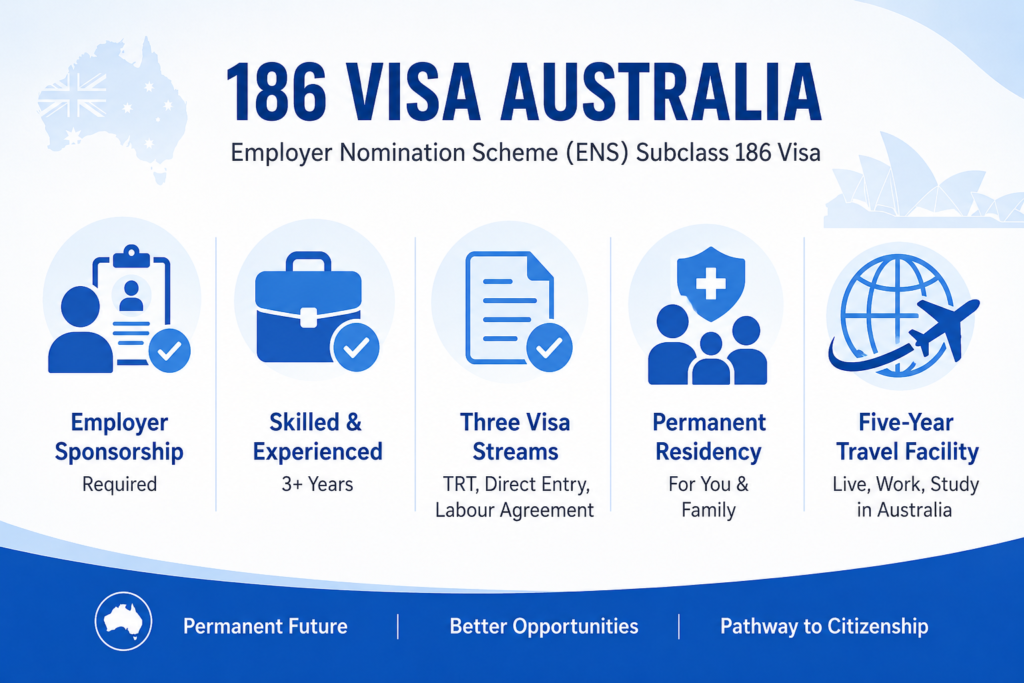
The visa involves two main steps:
Applicants can apply inside or outside Australia. If applying from within Australia, you must hold a valid visa (such as a Subclass 482 TSS visa, 457 visa, or a Bridging Visa A, B, or C).
Understanding what is 186 visa in Australia helps ensure you meet the eligibility and documentation requirements before applying.
There are three streams under the Subclass 186 Visa:
Each stream has distinct eligibility conditions and applies to different employment situations.
The nominating business must:
You must:
Understanding the 186 visa for Australia requirements is essential for both employers and applicants before submitting an application under any stream.
For current holders of the TSS 482 or 457 visa who have worked for their nominating employer in the same occupation for at least two years.
Key Features:
Applies if you have not previously worked for your nominating employer under a temporary visa. You must have a positive skills assessment and three years of post-qualification work experience.
Benefits:
This stream is for applicants sponsored under a labour agreement between their employer and the Australian government. It caters to specific industries, regional skill shortages, or projects agreed upon in the labour agreement.
The visa application involves three key stages:
Before lodging your visa, you may need a formal skills assessment from a recognised authority for your occupation. This confirms your qualifications and experience meet Australian standards (depending on the stream).
Your employer must lodge a nomination with the Department of Home Affairs, demonstrating a genuine need for the position and the capacity to employ you for at least two years.
Submit your visa application within six months of nomination approval. Provide:
Once approved, you will receive permanent residency under the 186 Visa Australia.
The Subclass 186 Visa grants permanent residency, meaning it does not expire as long as you remain in Australia as a permanent resident. It includes a five-year travel facility, allowing you to leave and re-enter Australia freely. After five years, a Resident Return Visa (RRV) is required to maintain travel rights or pursue citizenship.
Some applicants may be exempt from age or English requirements:
The visa 186 for Australia offers one of the most stable routes for skilled professionals seeking a long-term future in Australia.
These updates are critical for understanding the 186 visa for Australia requirements and ensuring compliance before application submission.
Applying for the 186 Visa Australia can be complex. At Kritin Global, our registered migration agents simplify the process with:
Contact us today to start your permanent residency journey under the Employer Nomination Scheme.
The Subclass 186 Visa is a permanent residency visa that allows skilled workers to live, work, and study in Australia indefinitely after sponsorship by an eligible employer.
Applicants must have employer nomination, relevant skills and work experience, English proficiency, health and character clearance, and generally be under 45 years old (with exemptions available).
Yes, offshore applications are allowed. Your employer’s nomination must be approved before lodging your visa application. Streams like Direct Entry and Labour Agreement are suitable for overseas applicants.
Benefits include permanent residency for you and family, access to Medicare, education, social security, a pathway to citizenship, and freedom to change employers after a set period.
This information is general in nature. It does not constitute migration advice as visa conditions can change anytime. For advice specific to your situation, consider consulting a registered migration agent or checking the Department of Home Affairs website.


